Choosing the wrong elevator can lead to costly remodeling, poor space utilization, and recurring maintenance issues. Many homeowners struggle with fitting traditional elevator systems into modern homes. The solution? Hydraulic home elevators — compact, quiet, and perfect for residential use.
Hydraulic home elevators are compact, energy-efficient systems that use fluid pressure to lift and lower elevator cars. Ideal for villas and residences, they eliminate the need for a machine room, making them a space-saving, cost-effective solution for modern homes.
What is a Hydraulic Home Elevator?
Hydraulic drive is one of the earliest elevator drive methods. The transmission medium of early hydraulic elevator was water, it exploited the incompressibility of water by increasing the pressure to raise the water pressure and entered the cylinder to push the piston in the cylinder to lift the cab, making the cab ascend,the car descended under its own weight by opening the venting valve to drain the fluid. However, due to the presence of air bubbles in the hydraulic pressure and being difficult the rust problem of the cylinder to solve, ever since then, oil was used as the medium to drive the piston in a linear motion instead of water.
Hydraulic elevator is particularly suitable for short travels and heavy loads due to the advantages of a large lifting force, high mechanical efficiency and low energy consumption. In addition, as hydraulic elevator does not require a machine room at the top, it can effectively reduce the vertical size of the shaft and utilize the space in the building,therefore, the application prospect of hydraulic elevator is quite broad,which is widely used in parking lots, factories and low-rise buildings,hydraulic elevator is more economical and appropriate than traction elevator for heavy loads, slow speeds and short travel distances.
Why Are Hydraulic Elevators Ideal for Villas and Homes?
Hydraulic home elevators offer several advantages over other systems:
- No machine room required: Saving valuable floor space
- Quiet operation: Thanks to sealed hydraulic systems
- Customizable: Tailored cabin finishes, door styles, and configurations
- Smooth start and stop: Ensuring a comfortable ride
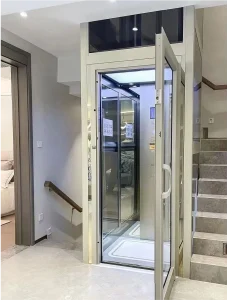
These elevators are designed for easy integration into existing homes and new constructions alike.
How Does a Hydraulic Elevator Work?
A hydraulic elevator works by pushing hydraulic fluid from a pump into a cylinder, causing the piston to raise the elevator cab. To descend, the system releases the fluid back into the reservoir, letting gravity do the work.
Most hydraulic lifts operate at speeds up to 40 feet per minute and can carry heavier loads than traction elevators. This makes them perfect for carrying passengers or even small furniture pieces in homes.
Are Hydraulic Home Elevators Safe?
Yes. In fact, elevator safety is one of the main reasons homeowners choose hydraulic systems. Safety features include:
- Emergency battery-operated lowering
- Light curtains and door sensors
- Backup systems and alarms
- ARD (Automatic Rescue Device) to move the elevator to the nearest floor in case of power failure
When the external power supply of the elevator is abnormal,it is capable of automatically detecting and activating the backup power supply,gradually moving the elevator car to the nearest floor and then opening the elevator door to safely release the passengers.
These safety features make the system reliable even in emergency situations.
How Energy-Efficient Are Hydraulic Elevators?
While hydraulic elevators use more power when ascending, they require almost none when descending due to gravity. Additionally:
- 220V conventional voltage is sufficient
- Uses hydraulic fluid responsibly, without contamination
- Modern systems come with battery backup and standby modes
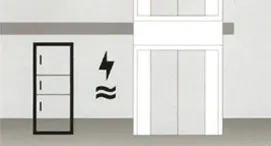
They are a smart, energy-efficient choice for eco-conscious homeowners.
What Makes Hydraulic Elevators Customizable?
Elevator design plays a crucial role in enhancing your home’s aesthetics. With Jiade Elevator’s solutions, you get:
- Panoramic glass elevator shaft
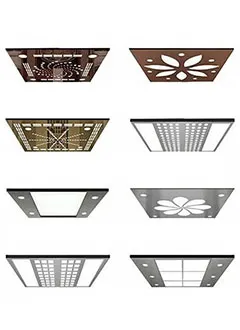
- Starry LED ceiling and premium flooring
- Modern operating panel with touch screen
- Multiple finish options for elevator cab and walls

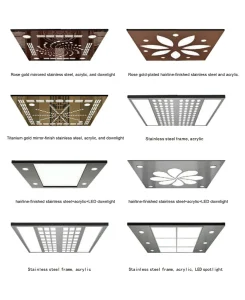
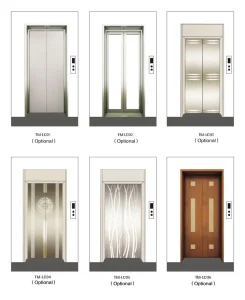
Customization isn’t just visual. We tailor elevator systems to your structural needs.
How Do Hydraulic Elevators Compare to Traction Elevators?
| Feature |
Hydraulic Elevator |
Traction Elevator |
| Space Requirement |
Minimal (no machine room) |
Requires overhead clearance |
| Cost |
More affordable |
Higher upfront cost |
| Ride Quality |
Smooth and quiet |
Slightly faster speeds |
| Maintenance |
Easier and cheaper |
Needs regular adjustments |
| Load Capacity |
Higher |
Moderate |
| Aesthetics |
Highly customizable |
Standard finishes |
VS hydraulic elevators, traction systems are better for taller buildings, but for 2-5 story homes, hydraulic lifts are more practical.
Where Can Hydraulic Home Elevators Be Installed?
These elevators offer flexible installation in various places:
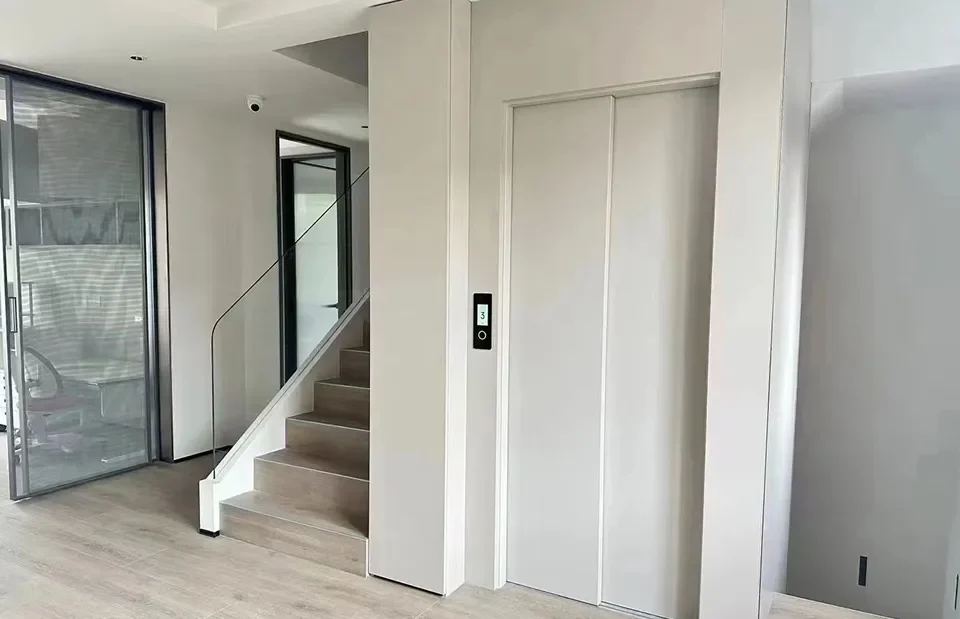
- Between staircases
- Against side walls
- Inside existing shafts
- In corners or balconies
Whether you need a retrofit or are building new, there’s a hydraulic home elevator solution that fits.
FAQs
Does a hydraulic elevator require a pit or overhead space?
Not necessarily. Many models are pitless or have shallow pits and can work with low overhead clearance.
How long does installation take?
A standard project can be completed in 2 to 4 weeks.
Are hydraulic elevators noisy?
No. Modern hydraulic systems use quiet pumps and sound-dampening materials to ensure near-silent operation.
Is it difficult to maintain a hydraulic home elevator?
Not at all. Occasional fluid checks and basic servicing are usually sufficient.
Can I install a hydraulic elevator in an existing home?
Yes. Their compact footprint makes them perfect for retrofitting in tight residential spaces.

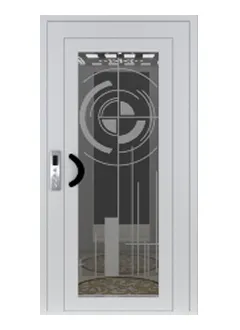 Personalize OrderTraction Type Villa ElevatorTraction home elevator: No machine room, saves costs. Uses counterweight/gantry style, fits home door types. VVVF drive for smooth ride
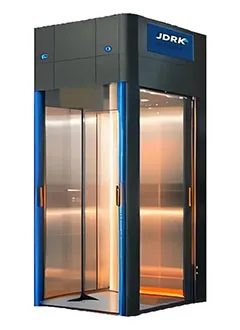 Personalize OrderOptional SeriesEvery detail is tailored for comfort, aesthetics, and functionality—ensuring your elevator feels truly unique to your space.